Skip to content

The science

A matrix, not a scoop of powder.

BioCell Collagen is hydrolyzed type II collagen bound to hyaluronic acid and chondroitin sulfate — the same three molecules that make cartilage and the dermis. Multiple human trials. Seven U.S. and international patents.

7
U.S. and international patents on the matrix
60×
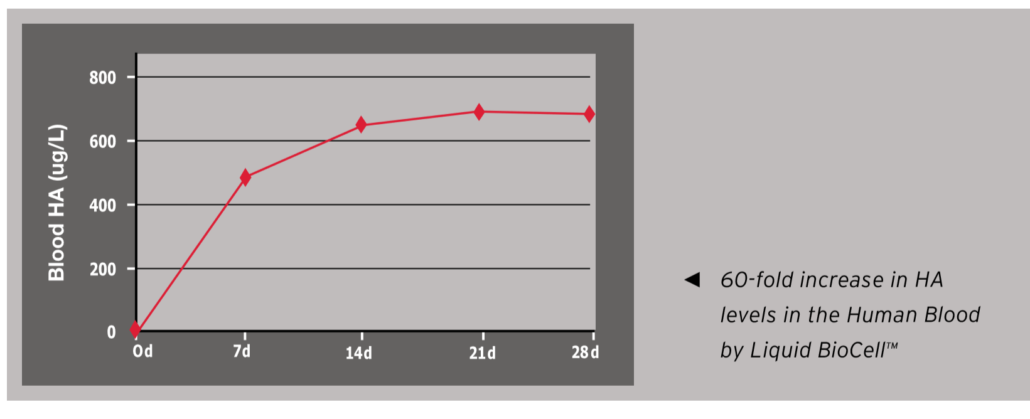
Steady-state hyaluronic acid in a human bioavailability study
89%
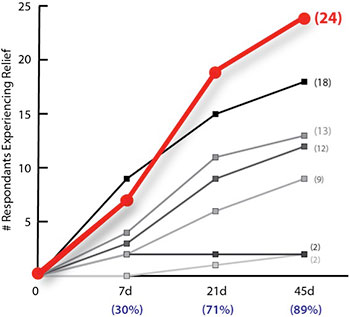
Of subjects reported improved joint comfort in a 45-day trial
1–2 g
Clinical daily dose — not the 10 g typical of type I powders
BioCell Collagen properties compared with other collagen types

How it works

It looks like your connective tissue on purpose.

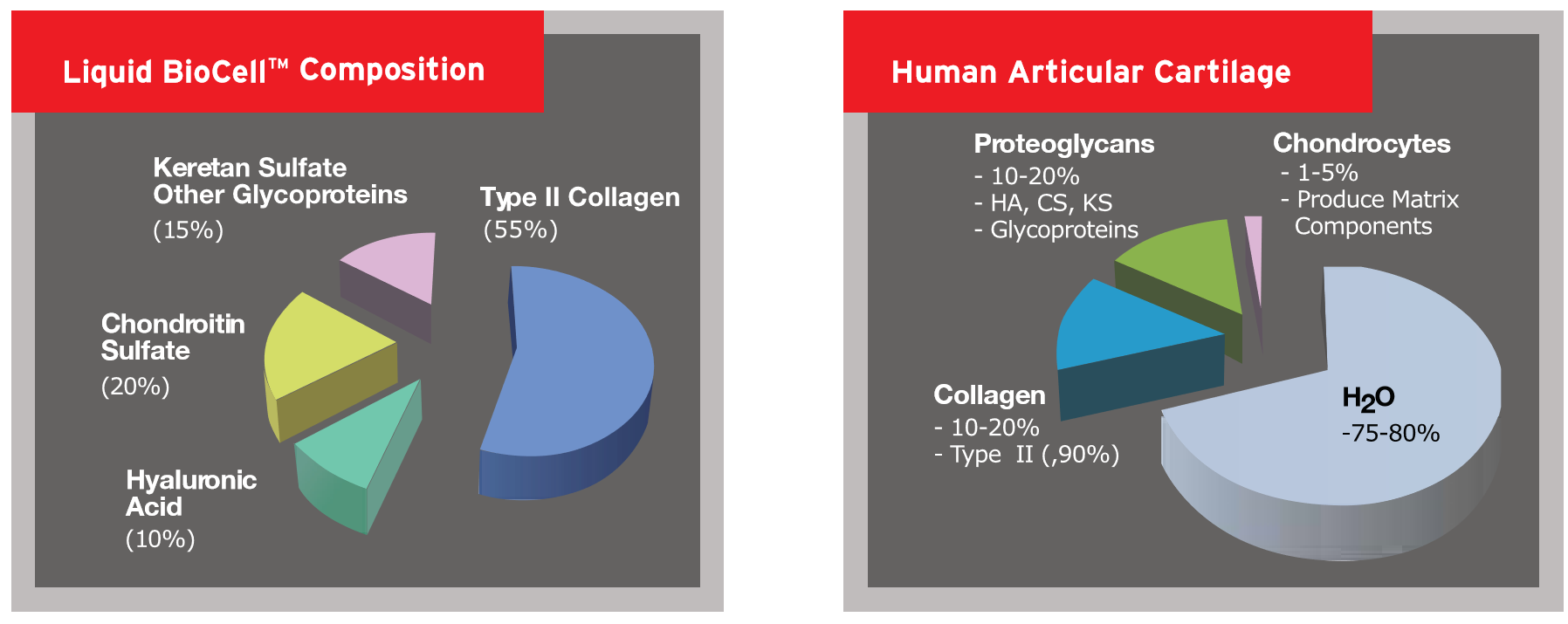
Researchers isolated a cartilage matrix of type II collagen, hyaluronic acid, and chondroitin sulfate that closely resembles human articular cartilage. A patented hydrolysis process brings the molecular weight down to about 1.5–2 kDa — versus 200–300 kDa for undenatured collagen that the gut barely handles.

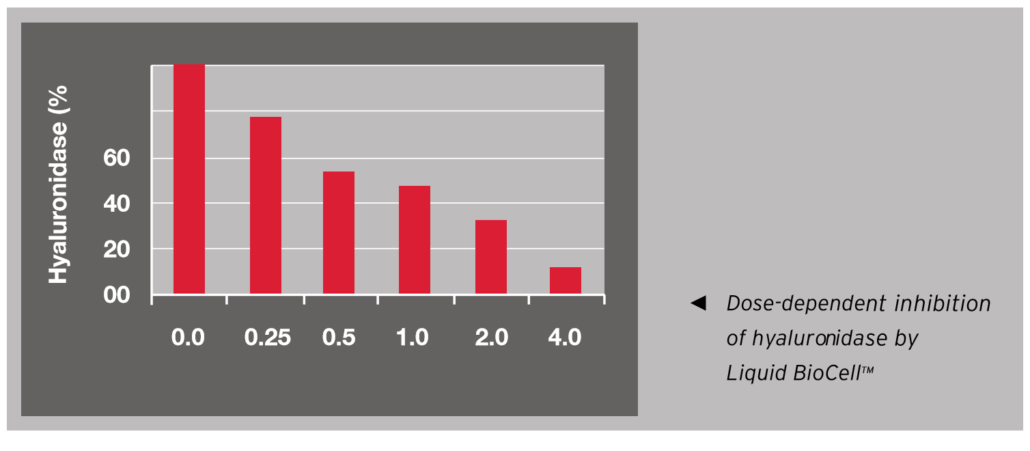
In liquid form, absorption can begin in the mouth, skipping the long first-pass the powder still has to make. The same matrix deactivates hyaluronidase, the enzyme that tears hyaluronic acid down. That is why a bioavailability study saw steady-state HA rise as much as sixty-fold.

Delivery

Liquid versus the pill.

Liquid

  • Absorption can begin immediately
  • No binders or fillers to digest first
  • Easier to swallow, especially later in life
  • Prepared from fresh elements, not powder sitting a year
  • Fewer doses to reach the same absorbed amount

Pills and powders

  • Must clear the gut, then the liver (first-pass)
  • Binders and fillers delay the bloodstream
  • Hard to swallow for many older adults
  • Published absorption of pill nutrients is often a fraction of the label
  • Hours to a noticeable effect, if any
Liquid BioCell Life blend ingredients infographic

Not all collagen

Type II, with the glycosaminoglycans still attached.

Versus undenatured (unhydrolyzed) collagen
BioCell Collagen (hydrolyzed)Undenatured type II
Collagen formType II, hydrolyzedType II, unhydrolyzed
Hyaluronic acid & chondroitinYesUnclear / not substantial
Molecular weight1.5–2.5 kDa200–300 kDa
Efficient absorptionYesUnclear
Clinical HA bioavailabilityAbout 60-fold increaseNot shown
Chondrocyte stimulationYesNo
Hyaluronidase inhibitionYesUnclear
Human studiesJoints and skinJoints
Hyaluronic acid bioavailability chartHyaluronidase inhibition chartJoint health science graphic

Human studies

What was actually measured.

joints

Subjective joint comfort, 45 days

89% reported improved joint comfort

Eighty-nine subjects with joint discomfort ingested 2 g of BioCell Collagen daily for 45 days. Eighty subjects (89%) experienced improved joint comfort. One placebo subject improved. No adverse events associated with BioCell Collagen.

Human trial, 89 subjects

joints

WOMAC joint discomfort, 8 weeks

Up to 40% less discomfort vs placebo

Randomized, double-blind, placebo-controlled trial in 16 subjects. 2 g daily for 8 weeks. BioCell Collagen significantly reduced joint discomfort by as much as 40% compared with placebo, using the WOMAC index.

Experimental Biology, 2004

joints

Confirmatory WOMAC trial, 10 weeks

71% had at least 30% less discomfort

Randomized, double-blind, placebo-controlled trial in 80 subjects. 2 g daily for 10 weeks. Confirmed the earlier WOMAC result. No adverse events associated with BioCell Collagen.

Journal of Agricultural and Food Chemistry, 2012

Read the paper

joints

Osteoarthritis symptom pilot

Clinically meaningful improvements vs placebo

Placebo-controlled eight-week pilot in sixteen adults with osteoarthritis (Sheldon, Miami Research Associates, 2003). BioCell Collagen II was superior to placebo on a standard OA symptom tool, without a greater incidence of side effects.

Sheldon, E. Miami Research Associates, 2003

skin

Facial aging, 12 weeks

Fewer lines, less dryness, more dermal collagen

Twenty-six subjects undergoing natural and photoaging took 1 g daily for 12 weeks. Measurements included wrinkles, fine lines, dermal collagen, hydration, and microcirculation. BioCell Collagen reduced facial lines and wrinkles, reduced dryness and scaling, and increased collagen content in the dermis. No adverse events.

Clinical Interventions in Aging, 2012

Read the paper

bioavailability

Hyaluronic acid bioavailability

Up to a 60-fold increase in steady-state HA

In a 36-hour single-dose study, HA in blood peaked more than 7000% above control at twelve hours. In a 28-day daily-dose study, steady-state HA reached about 3500% above control and an HA metabolite more than 11,000% above control. Subjects taking Liquid BioCell (1500 mg/day) for 28 days increased steady-state HA as much as 60-fold. The matrix also deactivates hyaluronidase, the enzyme that breaks HA down.

Judy, W. SIBR, 2004 · HA follow-on in Liquid BioCell

recovery

Recovery after weight training

Lower stress markers, less performance drop

Blood markers associated with muscular stress (creatine kinase, lactate dehydrogenase, C-reactive protein) improved versus placebo after exercise challenges. Post-challenge performance decrement was diminished in the BioCell Collagen group.

Journal of the International Society of Sports Nutrition

Read the paper

safety

Acute and 90-day oral safety

Well tolerated at all doses studied

Two oral toxicity studies in rats of hydrolyzed chicken sternal cartilage (collagen type II, chondroitin sulfate, hyaluronic acid). Acute 5000 mg/kg: all survived, normal weight gain, no gross lesions. Subchronic 30, 300, and 1000 mg/kg for 90 days: all survived; differences were not dose-related or toxicologically significant.

Schauss et al., Food and Chemical Toxicology, 2007
Questions we get

Before you buy a scoop.

Is this the same as the collagen powder at the grocery store?

Almost never. Most powders are type I collagen from hide or fish, dosed around 10 grams, without meaningful hyaluronic acid or chondroitin. BioCell Collagen is hydrolyzed type II from cartilage — the collagen of joints — naturally bound to HA and chondroitin, at a patented low molecular weight, in a clinical dose of 1–2 grams.

Why liquid instead of a pill?

The matrix was first a powder. A liquid delivery means absorption can begin in the mouth and does not have to wait on binders, fillers, or a long trip through first-pass metabolism. Liquids are also easier for people who do not like swallowing horse-pills. The clinical work is on the matrix itself; the liquid is how we prefer to get it in.

How soon do people notice something?

Skin hydration and the feel of joints often shift in a few weeks. Published joint trials ran 8–10 weeks; the facial-aging study ran 12. Give it a full three months. Individual results vary.

How should I start?

A minimum of two bottles a month for three months. That is the honest protocol — not one bottle to try and stop. Call if you want help matching a formula.

Who is this for?

Adults who feel connective tissue aging: stairs, tennis, running, a face that looks drier than it feels. Athletes who have used their joints up. Anyone tired of powders that do not match cartilage. If you are pregnant, nursing, or under medical care, talk to your physician first.

See the products